

Ever been invited to a Japanese dinner party and panicked about chopstick etiquette? You’re not alone. Using chopsticks incorrectly isn’t just awkward, in some Asian cultures, certain mistakes can be deeply offensive or even symbolize death. Whether you’re dining in Tokyo, Seoul, or at your local ramen spot, mastering proper chopstick etiquette shows respect and cultural awareness.
The good news? Most mistakes are easily avoidable once you know what to watch for. And choosing the right titanium chopsticks can actually help you avoid common errors thanks to their superior grip, weight balance, and premium appearance. Let’s dive into the 12 most common chopstick faux pas and how to eat with confidence.
Table of Contents
The 12 Biggest Chopstick Etiquette Mistakes (And How to Avoid Them)

❌ Mistake #1: Sticking Chopsticks Upright in Rice
The Error: Placing your chopsticks vertically in a bowl of rice so they stand upright.
🔴 Why It Matters: This resembles incense burned at funerals in Japan, China, and Korea. It’s associated with offerings to the dead and is considered extremely bad luck and disrespectful at the dining table.
The Fix: Always lay your chopsticks across your bowl, plate, or on a chopstick rest when not in use. If no rest is provided, place them on the edge of your plate or create a makeshift rest by folding the paper wrapper.
✅ Titanium Advantage: Premium titanium chopsticks have the perfect weight to rest stably without rolling off plates. The ZEARE square design particularly excels here—the anti-roll shape ensures they stay put on any surface.
❌ Mistake #2: Passing Food Chopstick-to-Chopstick
The Error: Using your chopsticks to hand food directly to someone else’s chopsticks.
🔴 Why It Matters: This mimics a Japanese funeral ritual where bones of cremated loved ones are passed between family members using chopsticks. It’s one of the most serious taboos.
The Fix: Place the food on the person’s plate, or have them take it from a shared serving dish. If you must share from your portion, place it on a small plate first.
✅ Titanium Advantage: When sharing, FOFAYU titanium chopsticks with their textured grip make it easy to precisely place food on others’ plates without fumbling—you’ll look graceful, not clumsy.
❌ Mistake #3: Spearing or Stabbing Food
The Error: Using chopsticks like a fork to stab or pierce food items.
🔴 Why It Matters: Chopsticks are meant for grasping, not stabbing. This behavior suggests you lack proper chopstick skills and is considered crude or childish (acceptable only for young children learning).
The Fix: Practice the proper pinching grip. For difficult items like slippery tofu or round dumplings, approach from the side with a gentle squeeze rather than piercing from above.
✅ Titanium Advantage: The grooved tips on Valtcan titanium chopsticks provide exceptional grip on slippery foods—no stabbing required. Their CNC-milled texture grabs everything from silky tofu to oily noodles with ease.
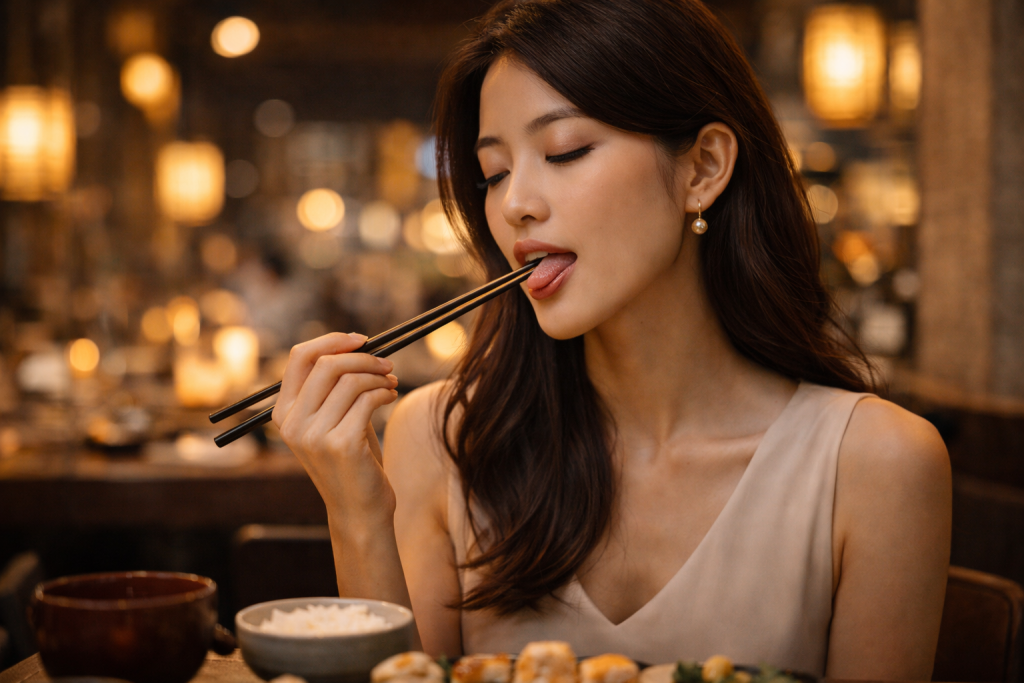
❌ Mistake #4: Licking or Sucking on Chopsticks
The Error: Licking sauce off chopsticks or putting them in your mouth to suck off food.
🔴 Why It Matters: This is considered unsanitary and impolite in all East Asian cultures. Chopsticks are tools for transferring food, not utensils to be consumed themselves.
The Fix: If sauce is dripping, use a napkin to wipe your chopsticks. Take smaller bites to avoid excess sauce, and eat with good technique to minimize mess.
✅ Titanium Advantage: Unlike porous wooden chopsticks that absorb flavors and encourage licking, titanium’s non-porous surface doesn’t trap food particles or sauce. This naturally discourages the habit.
❌ Mistake #5: Pointing or Gesturing With Chopsticks
The Error: Using chopsticks as a pointer during conversation or waving them around while talking.
🔴 Why It Matters: Pointing with chopsticks is seen as aggressive or rude, similar to pointing your finger at someone. It can come across as accusatory or disrespectful.
The Fix: Set down your chopsticks when making gestures or emphasizing points in conversation. Keep them still and resting on your plate or chopstick rest when not actively eating.
❌ Mistake #6: Digging or Searching Through Food
The Error: Using chopsticks to dig through a dish searching for specific pieces (cherry-picking the best items).
🔴 Why It Matters: Called “mayoi-bashi” (迷い箸) in Japanese, this shows greed and disrespect to others sharing the meal. It contaminates the food with saliva from your personal chopsticks.
The Fix: Take items from the top of communal dishes. Decide what you want before reaching in, then pick it up decisively. For personal bowls, eat in the order served.
✅ Titanium Advantage: The precision control of balanced titanium chopsticks lets you pick up items cleanly on the first try—no fishing or multiple attempts needed.
❌ Mistake #7: Tapping Chopsticks on Bowl or Table
The Error: Tapping or drumming your chopsticks together or on the rim of your bowl.
🔴 Why It Matters: This behavior is associated with begging—in historical China, beggars would tap their bowls to attract attention. It’s considered extremely rude and ungrateful.
The Fix: Keep your chopsticks quiet. If waiting for food, rest them politely. Never create noise with utensils at the table.
❌ Mistake #8: Using Mismatched or Damaged Chopsticks
The Error: Using chopsticks that don’t match or are broken, splintered, or bent.
🔴 Why It Matters: In formal settings, mismatched or damaged chopsticks suggest poverty or carelessness. They also make you look unprepared and disrespectful of the meal.
The Fix: Invest in quality chopsticks and replace them when damaged. For travel, carry your own reliable pair rather than depending on disposable or worn restaurant sets.
✅ Titanium Advantage: Titanium chopsticks never splinter, warp, or break. They maintain their perfect matched appearance for decades. The Kuvik ultralight set includes a protective case that keeps your chopsticks pristine—perfect for making a good impression.
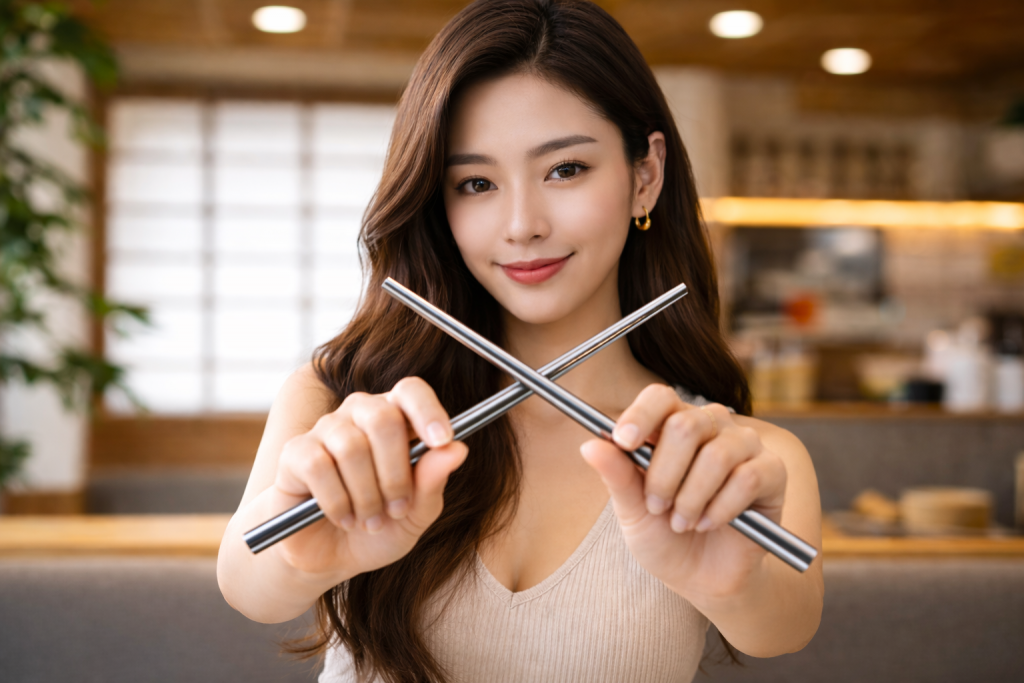
❌ Mistake #9: Crossing Chopsticks in an “X” Shape
The Error: Laying chopsticks crossed over each other when setting them down.
🔴 Why It Matters: In some Asian cultures, crossed chopsticks symbolize death or denial. It can be seen as a bad omen or offensive gesture.
The Fix: Always place chopsticks parallel to each other, either on a rest or across the edge of your plate with tips pointing left (right in Korea).
❌ Mistake #10: Hovering or Wavering Over Dishes
The Error: Holding chopsticks over multiple dishes while deciding what to take, moving back and forth indecisively.
🔴 Why It Matters: Called “mayoi-bashi” (same term as digging), this indecisiveness is seen as rude and holds up the meal for others. It also risks dripping food or sauce.
The Fix: Make your selection before extending your chopsticks toward the food. Move directly and purposefully.
❌ Mistake #11: Rubbing Disposable Chopsticks Together
The Error: Rubbing wooden disposable chopsticks together to remove splinters.
🔴 Why It Matters: While sometimes necessary with cheap disposables, doing this at nice restaurants implies you think their chopsticks are low-quality. It can insult your host or the establishment.
The Fix: If chopsticks need smoothing, do it discreetly in your lap. Better yet, carry your own quality chopsticks so this never becomes an issue.
✅ Titanium Advantage: Eliminate this problem entirely. Premium titanium chopsticks are always smooth, splinter-free, and ready to use. They signal respect for the meal and elevate your dining presence.
❌ Mistake #12: Using the Wrong End of Communal Chopsticks
The Error: Using the end you’ve been eating with to serve yourself from shared dishes.
🔴 Why It Matters: This is unhygienic and spreads saliva/germs to communal food. It’s particularly frowned upon in health-conscious modern dining.
The Fix: Flip your chopsticks around to use the clean ends (the tops) when taking from shared dishes, or request serving chopsticks. Some people carry a second pair specifically for serving.
✅ Titanium Advantage: Titanium’s antimicrobial properties naturally resist bacterial growth. While you should still follow proper etiquette, titanium chopsticks are more hygienic than wood or plastic. The MAGSTICKS magnetic design keeps pairs together, making it easy to carry a serving pair alongside your personal pair.
Cultural Differences: Japan vs. China vs. Korea
While many rules are universal, some etiquette varies by country. Understanding these nuances shows cultural sophistication:
| Rule | 🇯🇵 Japan | 🇨🇳 China | 🇰🇷 Korea |
|---|---|---|---|
| Chopstick Length | Shorter (7-8″) | Longer (9-11″) | Medium (9″) |
| Chopstick Material | Wood, lacquer preferred | Wood or plastic common | Metal (steel) traditional |
| Resting Position | Tips pointing left | Tips pointing away from you | Tips pointing right |
| Bowl Lifting | Lift rice bowls to mouth | Acceptable to lift bowls | Never lift bowls (use spoon) |
| Slurping Noodles | Acceptable and expected | Generally acceptable | Less common, quieter |
| Chopstick Placement | On hashioki (rest) always | On table or plate okay | On rice bowl edge okay |
| Finishing Food | Finish everything (polite) | Leave a little (shows abundance) | Finish everything (polite) |
Pro Tip: When in doubt, observe what locals do and follow their lead. The fact that you’re making an effort to follow etiquette shows respect, even if you make minor mistakes.
Why Titanium Chopsticks Are Your Etiquette Secret Weapon
Beyond helping you avoid specific mistakes, titanium chopsticks offer several etiquette advantages over traditional materials:
🏆 Premium Appearance Signals Respect
- Titanium’s sleek, professional look shows you take dining seriously
- Never embarrass yourself with splintered or mismatched chopsticks
- The substantial weight conveys quality and mindfulness
🎯 Superior Control Prevents Mishaps
- Balanced weight distribution helps you grip food confidently (no fumbling or dropping)
- Textured tips prevent slipping—crucial for delicate items that would otherwise require stabbing
- Precise handling means you won’t accidentally knock over soy sauce or make noise
🧼 Hygiene Excellence
- Non-porous surface doesn’t harbor bacteria like wooden chopsticks
- No absorption of oils or flavors—always neutral tasting
- Easy to clean thoroughly, making them safe for communal dining
♻️ Environmental Respect
- Carrying reusable chopsticks shows environmental consciousness (valued in modern Asian culture)
- Never waste disposable chopsticks—a respectful choice
- Lifetime durability means you’re always prepared
Quick Reference: The Essential Do’s and Don’ts
| ✅ DO | ❌ DON’T |
|---|---|
| Rest chopsticks parallel on a chopstick rest | Stick chopsticks upright in rice |
| Place food on others’ plates when sharing | Pass food chopstick-to-chopstick |
| Use the pinching grip properly | Stab or spear food with chopsticks |
| Keep chopsticks quiet and still when not eating | Tap, drum, or wave chopsticks around |
| Take food decisively from shared dishes | Dig through food searching for best pieces |
| Use clean, matching, quality chopsticks | Use damaged or mismatched chopsticks |
| Flip chopsticks to serve from communal dishes | Use eating ends for communal serving |
| Lay chopsticks parallel when resting | Cross chopsticks in an “X” shape |
Recommended Titanium Chopsticks for Proper Etiquette
Based on etiquette needs, here are our top picks:
| Model | Key Etiquette Feature | Price |
|---|---|---|
| FOFAYU | Elegant presentation, floral holder shows respect | Check Price |
| Kuvik Ultralight | Professional case, always pristine and ready | Check Price |
| Valtcan Grooved | CNC grip prevents fumbling or dropping food | Check Price |
| ZEARE Square | Anti-roll design, textured grip for confidence | Check Price |
For detailed reviews and comparisons, see our complete guide to the best titanium chopsticks.
FAQs: Chopstick Etiquette
No, not anymore. Historically, left-handed eating was discouraged in some Asian cultures, but modern etiquette accepts it completely. Use whichever hand is comfortable—proper technique matters more than which hand you use.
Politely excuse yourself and request a new pair from the server. Don’t make a fuss or draw attention to it. If you’re at someone’s home, apologize briefly and ask for replacements. Pro tip: The balanced weight of quality titanium chopsticks makes dropping them far less likely.
Yes, but it’s better to practice beforehand. Most restaurants will accommodate you, but at formal dinners or traditional establishments, requesting a fork can be seen as culturally insensitive. If you’re attending an important meal, practice at home first. Chopsticks with better grip like the ZEARE square design make learning much easier.
Absolutely—it’s increasingly common and respected! Bringing reusable chopsticks shows environmental consciousness and personal hygiene standards. Many people carry travel-friendly titanium sets specifically for this purpose. Just place them discreetly on the table and decline the restaurant’s disposables politely.
Place them horizontally across your bowl or plate with tips pointing left (in Japan) or to the right (in Korea). If a chopstick rest (hashioki) is provided, use it with tips pointing left. Never rest them pointing toward someone else, as this is considered aggressive. If no rest is available, fold the paper wrapper to create a makeshift stand.
In Japan, say “Itadakimasu” (ee-tah-dah-kee-mahs) before eating, which expresses gratitude for the meal. After finishing, say “Gochisousama deshita” (go-chee-so-sama desh-ta) to thank the host/chef. In China and Korea, such phrases aren’t mandatory, but a simple “thank you” is always appreciated.
Yes, absolutely. Metal chopsticks have been traditional in Korea for centuries, and titanium is simply a premium modern evolution. The sleek appearance, durability, and hygiene of titanium chopsticks are increasingly appreciated across Asia, especially among younger, environmentally-conscious diners. They signal quality and mindfulness.
Final Thoughts: Etiquette Is About Respect
Mastering chopstick etiquette isn’t about rigid rules—it’s about showing respect for the food, the culture, and the people you’re dining with. The 12 mistakes we’ve covered are easily avoidable once you understand the “why” behind them.
Investing in quality titanium chopsticks isn’t just about personal convenience—it’s a statement that you take dining seriously, care about sustainability, and respect the traditions of chopstick cultures. The superior grip, perfect weight balance, and premium appearance of titanium chopsticks will make you more confident, more precise, and more respectful at the table.
Whether you’re preparing for a business dinner in Tokyo, a family gathering at a Korean restaurant, or simply want to improve your technique at home, proper etiquette combined with the right tools will transform you from tourist to confident diner.
Ready to upgrade your chopstick game? Explore our top-rated titanium chopsticks and never worry about etiquette mistakes again.
Have questions about chopstick etiquette? Drop them in the comments below!


